
Rwanda’s Bold Formula One Vision and Its Ripple Effect Across East Africa
Rwanda plans to bring Formula One back to Africa in the 2030s. Here is how a shared regional vision could reshape travel, community growth, and cross-border connection.
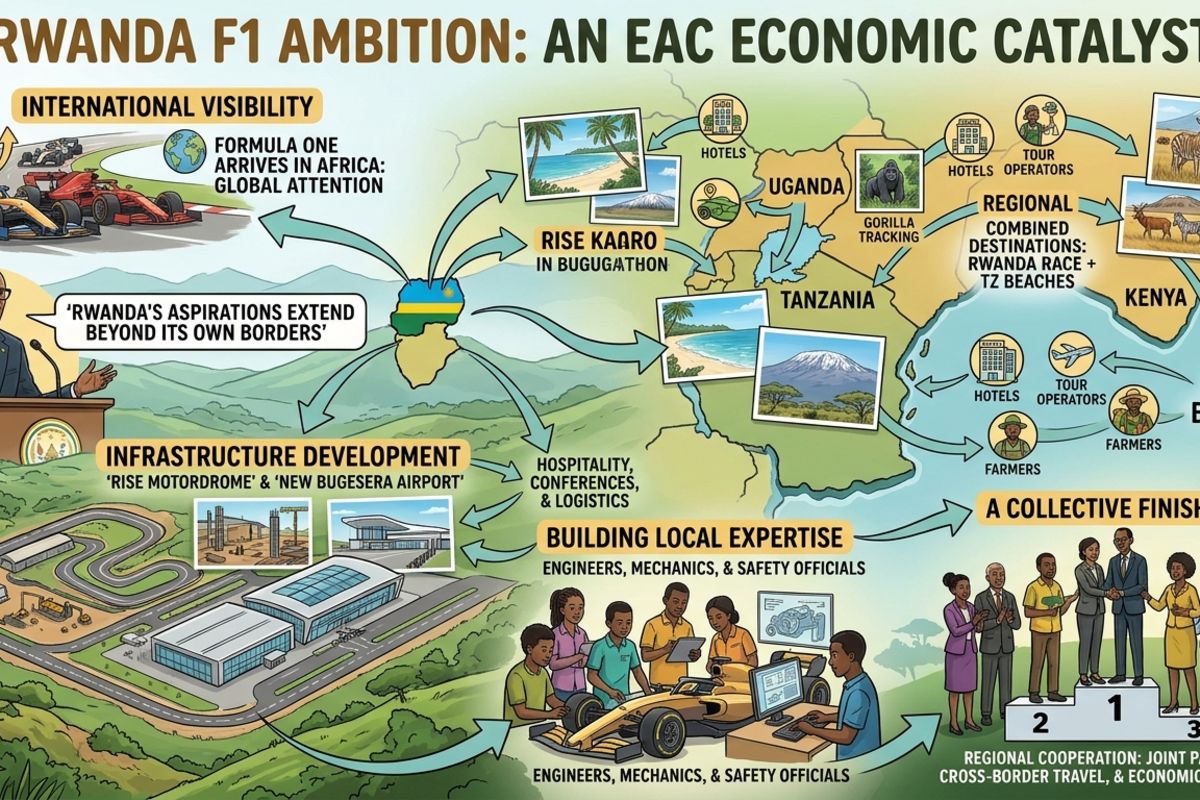
Africa has been absent from the Formula One calendar since 1993, but that long pause may soon come to an end. Rwanda is currently working toward a reported ten-year agreement to host a Grand Prix at the planned Rise Motordrome in Bugesera, with hopes of seeing racing arrive in the early 2030s. Rather than keeping the spotlight strictly local, the country is pitching the event as an open door for all of East Africa.
President Paul Kagame has pointed out that the ambition stretches beyond Rwanda's own borders. The idea is to turn a weekend of racing into a broader regional journey, inviting global visitors to explore the beaches of Zanzibar, track gorillas in Uganda, or wander through Kenya’s Maasai Mara. For local hospitality teams, transport operators, and small producers, that kind of shared curiosity could unlock steady economic momentum.
Building regional connections and skills
The proposed track is intended to sit beside Rwanda’s upcoming international airport, creating a wider hub for hospitality, enterprise, and culture. Yet for the surrounding region to truly benefit, neighboring countries will need to cooperate closely. Smooth border procedures, interconnected flights, and coordinated travel routes will be essential if travelers are to move effortlessly between countries.
There is also an emphasis on what happens away from the track. A major international event requires logistics planners, technicians, engineers, and hospitality staff. Investing in local training ensures that these new careers stay within the community rather than being imported from overseas. At the same time, clear oversight regarding public spending, environmental impact, and long-term costs will be vital to keeping the project grounded and sustainable.
Why this matters
Even if high-speed motorsport feels worlds apart from quiet mornings and mindful living, how regions plan for the future shapes our everyday world. When neighboring cultures come together to build thoughtful infrastructure, travel becomes simpler and more intentional. It reminds us that big ambitions work best when they leave room for local growth, calm journeys, and shared human connection.
Written by Limmizen Newsroom
Originally reported by The Citizen. This piece is a Limmizen rewrite in our own voice.