
Unveiling Tanzania: A Land of Natural Wonders and Rich Heritage
Journey with us to Tanzania, a captivating East African country brimming with breathtaking landscapes, diverse wildlife, and a vibrant cultural tapestry. Discover its majestic mountains, expansive plains, and serene coastlines.
Discovering Tanzania's Natural Splendor
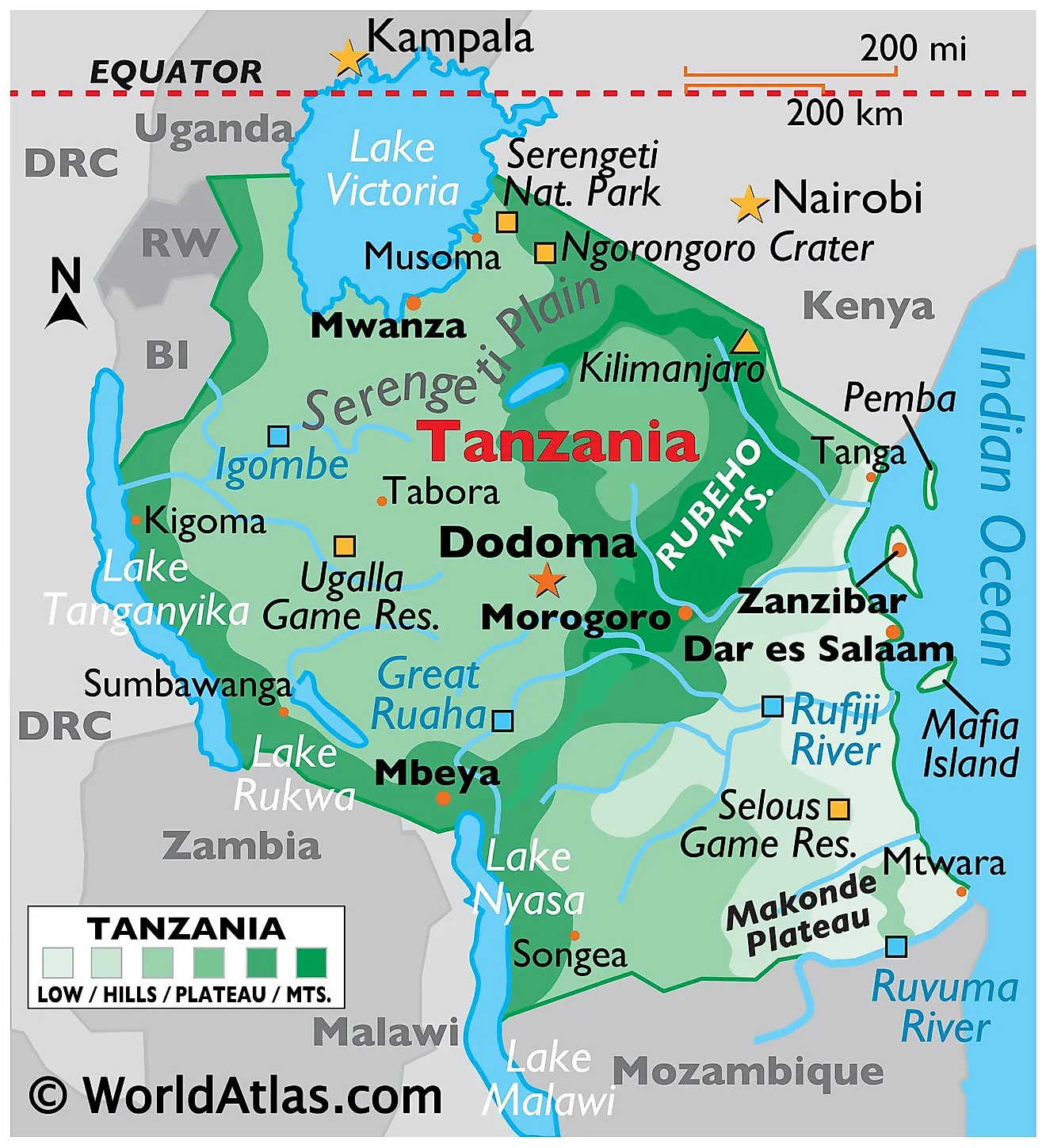
Nestled in East Africa, Tanzania is a truly vast and captivating country, spanning nearly a million square kilometers. It’s a place of incredible geographical diversity, sharing its borders with eight neighbors: Kenya and Uganda to the north, Rwanda, Burundi, and the Democratic Republic of the Congo to the west, and Zambia, Malawi, and Mozambique to the south. To its east, the warm waters of the Indian Ocean gently lap its shores.
One of Tanzania's most striking features is the East African Rift Valley, a dramatic geological marvel. As it enters the country from the north, it splits into two distinct branches. The Eastern Rift gracefully skirts the Tanzanian plateau, showcasing famous peaks like Mount Meru and, of course, the iconic Mount Kilimanjaro – Africa's tallest mountain, reaching an impressive 5,895 meters. This area is also home to large, shallow lakes like Lake Natron and Lake Manyara.
Further west, the Western Rift, also known as the Albertine Rift, carves out a natural boundary with the Democratic Republic of Congo. Here, you'll find some of Africa's deepest lakes, including the magnificent Lake Tanganyika, which holds the title of the continent’s deepest and the world’s second-deepest freshwater lake. This region isn't just about water; it also cradles precious wildlife havens like Mahale and Gombe Stream National Parks, renowned for their cherished chimpanzee populations.
In the heart of Tanzania lies the Central Plateau, a sprawling expanse averaging 1,200 meters above sea level. This landscape is a mosaic of vast grasslands and scattered woodlands, famously hosting the Serengeti National Park. It’s here that you can witness the awe-inspiring spectacle of millions of wildebeest and zebras on their annual migration. Heading south, the Southern Highlands offer a cooler climate and fertile ground, perfect for growing tea, coffee, and tobacco across ranges like Kipengere, Poroto, and Livingstone.
Along the country's eastern edge, the Coastal Plain stretches, a narrow, low-lying area adorned with sandy and clay soils. This charming strip runs from the Kenyan border down to the Ruvuma River at the Mozambique border. It’s home to bustling centers like Dar es Salaam, Tanzania's largest city, offering a vibrant mix of culture and history.
Beyond the mainland, Tanzania’s waters are equally impressive. A significant portion of Lake Victoria, Africa’s largest lake and a source of the Nile River, forms part of its northern boundary. Rivers like the Great Ruaha, Rufiji, and Kagera crisscross the land, vital for agriculture, transport, and power. The 600 km Rufiji River, the longest in the country, meanders through the Selous Game Reserve before meeting the Indian Ocean in a grand delta.
Islands of Spice and History
Off Tanzania's eastern coast, floating in the Indian Ocean, are enchanting islands and archipelagos. The most notable among them are Zanzibar, Pemba, and Mafia. These islands are not only famed for their aromatic spice production but also hold deep historical and cultural significance. Zanzibar, in particular, draws visitors from around the globe, eager to explore its beautifully preserved Stone Town, a UNESCO World Heritage Site.
Tanzania is administratively divided into 31 regions, with Tabora being the largest by area and Dar es Salaam leading in population. Dodoma, nestled in its namesake region, serves as the nation's capital. Each region is further structured into districts, divisions, and local wards, extending down to streets in urban areas and villages in rural settings, showcasing a well-organized tapestry of communities.
Why this matters: Exploring the geography of a place like Tanzania isn't just about maps; it's about understanding the foundation of a vibrant culture and rich biodiversity. For those who cherish calm and connection, learning about its serene lakes, majestic mountains, and the rhythm of its diverse landscapes offers a deeper appreciation for the planet’s wonders and the gentle whispers of nature that shape everyday life. It reminds us of the interconnectedness of land, life, and community, fostering a sense of peaceful awareness about our world.
Written by Limmizen Newsroom
Originally reported by WORLDATLAS. This piece is a Limmizen rewrite in our own voice.